Thierry Wasser: Biography, Career and Major Fragrance Creations
Thierry Wasser (born 1961) is a Swiss perfumer best known for his work as Guerlain’s in-house Master Perfumer. He became the fifth perfumer to hold the position in the history of the French fragrance house and, significantly, the first person outside the Guerlain family to occupy it. Before joining Guerlain, Wasser spent more than two decades working for the major fragrance and flavour companies Givaudan and Firmenich, creating perfumes for international fashion and beauty brands.
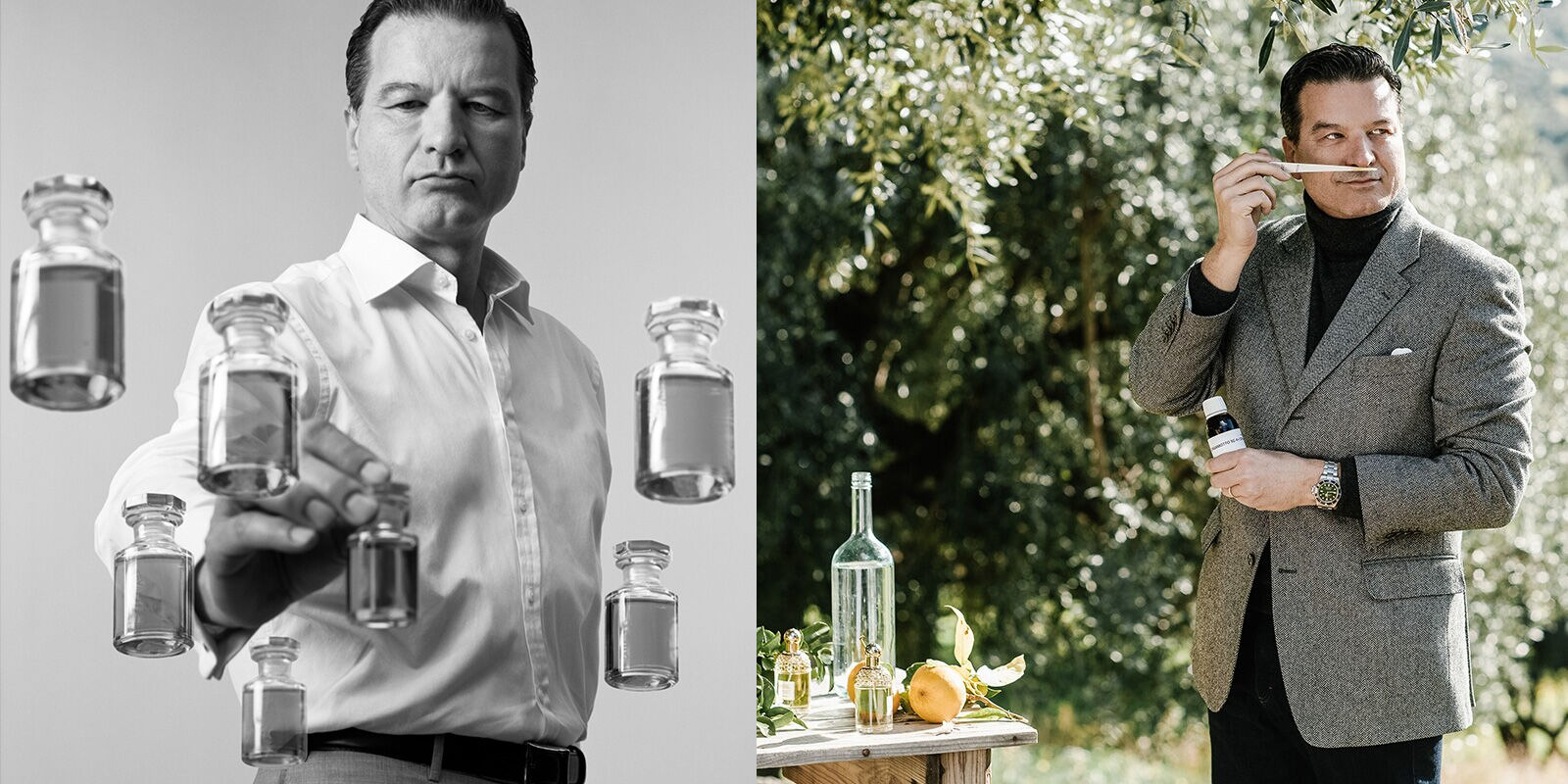
Thierry Wasser, Master Perfumer of Guerlain
Wasser was born in Switzerland and developed an early interest in plants and their aromatic properties. At the age of 20, he obtained a Swiss federal diploma in herbalism/botany. His initial career plans were not directly connected with perfumery: as a teenager he considered becoming a chef and briefly worked in the kitchen of a hotel-restaurant. His professional direction changed after he learned about Givaudan, the Swiss fragrance and flavour company based in Geneva.
In 1979, Wasser approached Givaudan and entered its perfumery training programme. According to a later interview, he was motivated initially by curiosity rather than a predetermined ambition to become a perfumer. He subsequently described the experience as the discovery of his vocation:
“I became a perfumer by chance.”
Givaudan and Firmenich
Wasser trained at Givaudan’s perfumery school and became a perfumer at approximately 24 years of age. He remained with the company for about twelve years. In 1987 he moved from Switzerland to France and established himself in Paris, where he worked as a fine-fragrance perfumer. His professional development brought him into contact with Jean-Claude Ellena, then a leading figure at Givaudan France; Wasser later recalled that Ellena had invited him to Paris.
In 1993, Wasser joined Firmenich, another major Swiss fragrance and flavour company. His Firmenich career included periods in New York and Paris and involved the creation of fragrances for a broad range of international clients. Among the brands associated with his work during this period were Christian Dior, Lancôme, Giorgio Armani, Jil Sander, Fendi, Diesel, Chopard and others.
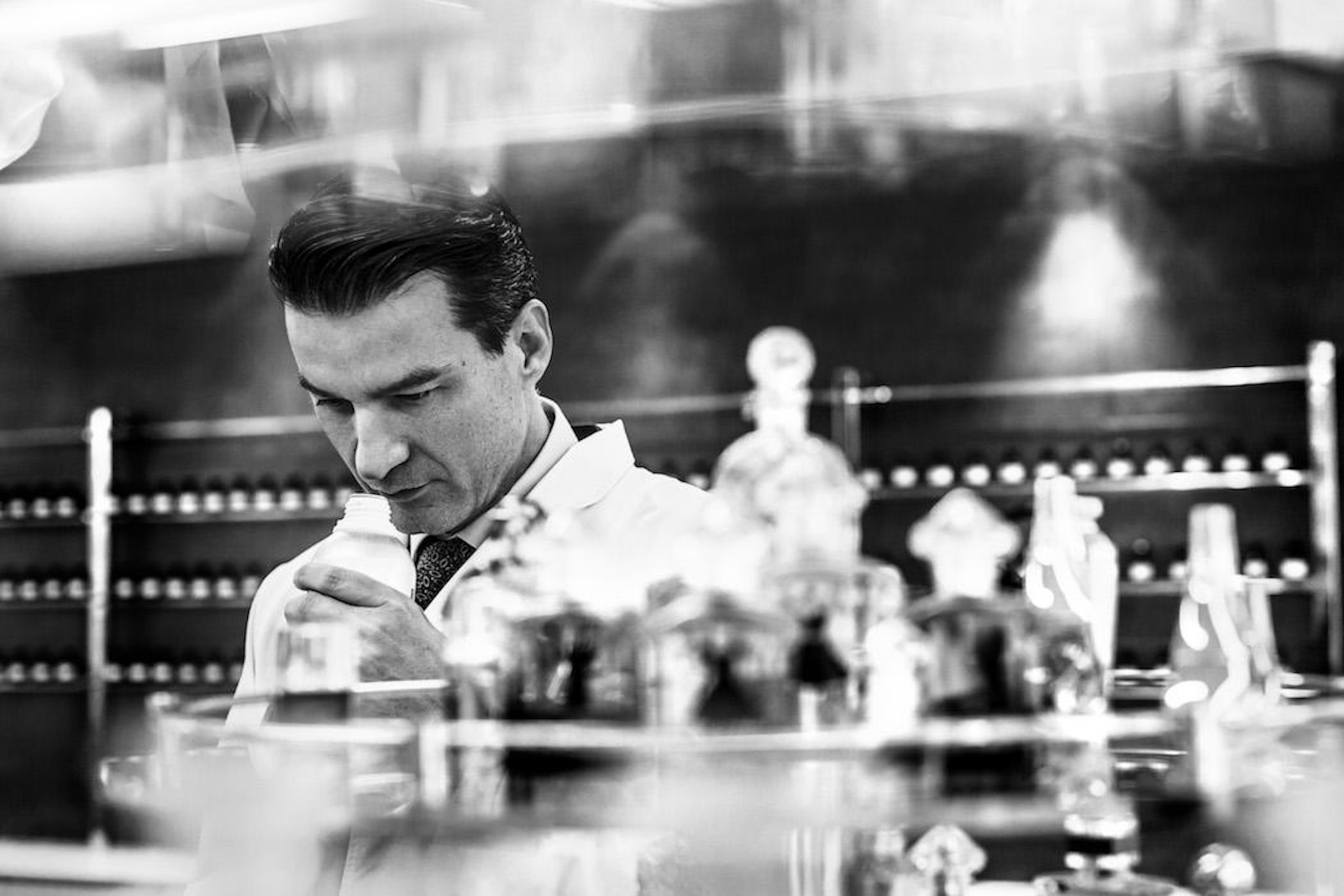
Thierry Wasser during the earlier years of his career
One of Wasser’s best-known pre-Guerlain compositions was Dior Addict, launched by Christian Dior in 2002. The fragrance established a particularly strong association between Wasser and modern oriental compositions, combining orange blossom, jasmine sambac, sandalwood and vanilla. In 2005, he collaborated with Annick Ménardo on Lancôme Hypnôse. His Firmenich-era portfolio also included Emporio Armani Diamonds (2007), Fendi Palazzo (2007), Diesel Fuel for Life pour Femme (2007) and several fragrances for Jil Sander, Grès and other brands.
His work for Guerlain actually began before his formal appointment as the house perfumer. In 2007, Wasser collaborated on Iris Ganache and Quand Vient la Pluie, working with Guerlain’s evaluation director Sylvaine Delacourte. This collaboration brought him into direct contact with Jean-Paul Guerlain and helped establish the relationship that would lead to his appointment the following year.
Appointment at Guerlain
In 2008, Laurent Boillot, then president of Guerlain, appointed Wasser as the house’s Director of Fragrance Creation and in-house perfumer. The appointment marked a major institutional change: for approximately 180 years, Guerlain’s principal perfumers had been members of the founding family. Wasser therefore became the first non-Guerlain to assume responsibility for the house’s perfume creation.
His position was broader than that of a conventional “nose.” Jean-Paul Guerlain presented Wasser as his successor, and the new perfumer assumed responsibility not only for developing formulas but also for raw-material sourcing, quality and aspects of the perfume business.
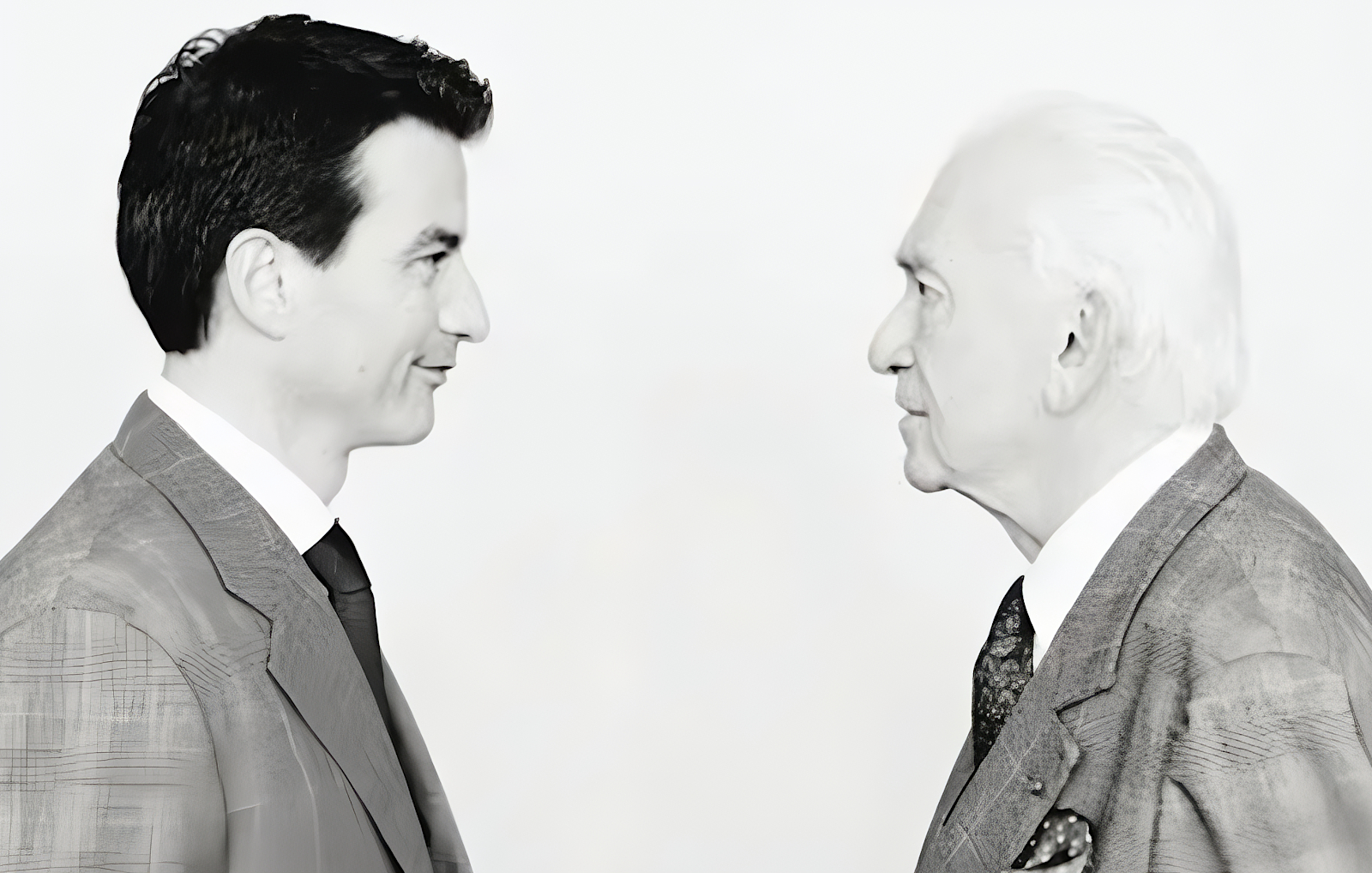
Jean-Paul Guerlain and Thierry Wasser, marking the transition between generations of Guerlain perfumers
Wasser later explained that his role allowed him to return to what he considered the fundamental function of a perfumer: controlling the formula and the materials rather than working solely from a client brief. “I wanted the title of Perfumer,” he said, explaining that for him the perfumer is the person “who creates and who runs the perfume business.”
The transition also involved preserving Guerlain’s historical identity while allowing the house to develop contemporary compositions. Wasser summarized this principle in 2008:
“It is very important to me that Guerlain has to move forward without denying its past.”
Major Guerlain Creations
Wasser’s first major composition following his appointment was Guerlain Homme (2008), a masculine fragrance built around a fresh “mojito” accord of lime, mint and rum, combined with woody and earthy materials. It was followed by Idylle (2009), a floral chypre centred on rose and patchouli.
He subsequently worked extensively on Guerlain’s heritage lines as well as new fragrances. Shalimar Parfum Initial (2011) offered a younger interpretation of the house’s 1925 classic, while La Petite Robe Noire (2012) became one of the most commercially important modern Guerlain launches. The latter developed from a limited-edition fragrance created by Delphine Jelk in 2009; Wasser participated in the development of the version released to the wider market in 2012.
Other significant creations include L’Homme Idéal (2014), which introduced a new masculine pillar for Guerlain; Santal Royal (2014); Néroli Outrenoir (2016); Oud Essentiel (2017); and Mon Guerlain (2017), created with Delphine Jelk. Mon Guerlain combined lavender, jasmine, vanilla and sandalwood and was conceived as a contemporary counterpart to the house’s historic Jicky.
Alongside mainstream launches, Wasser has contributed extensively to Guerlain’s more exclusive collections, including L’Art & La Matière. His work in this area reflects his emphasis on individual raw materials and their provenance. Guerlain describes the collection as a series of compositions in which exceptional ingredients become the central artistic subject of each fragrance.
Raw Materials, Sourcing and Perfumery Philosophy
A distinctive aspect of Wasser’s tenure at Guerlain has been his direct involvement in sourcing natural materials. He has travelled to producing regions including Bulgaria for rose, India for sandalwood, Calabria for bergamot and Grasse for jasmine. He has explained that sourcing became one of the most important differences between his previous work at fragrance-and-flavour companies and his position at Guerlain. At one point, he estimated that approximately 25–30% of his working time was spent travelling for raw-material sourcing.
The Bulgarian rose occupies a particularly important place in his personal olfactory vocabulary. In an interview with The Perfume Society, Wasser named Bulgarian rose as his favourite smell and noted that he travels to Bulgaria during the harvest. He also cited vanilla, masala chai and fresh grass among his favourite scents.
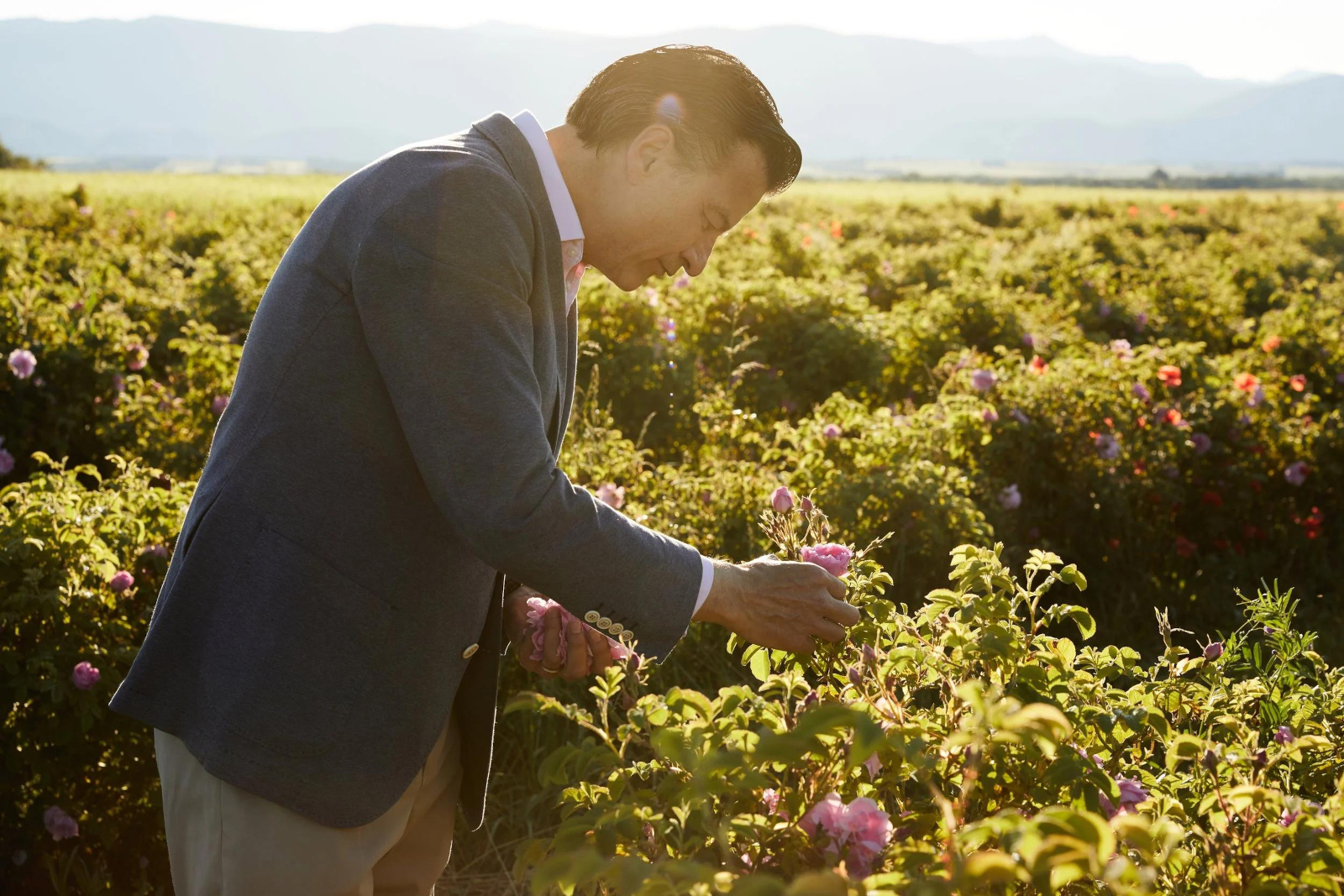
Thierry Wasser harvesting roses in Bulgaria, reflecting his direct involvement in sourcing natural fragrance materials
His approach combines traditional Guerlain materials and techniques with contemporary perfumery. Rather than attempting to make perfume completely rational or literal, Wasser has defended the importance of mystery and emotional interpretation. In a 2018 interview with Le Monde, the headline attributed to his philosophy was:
“Le parfum ne doit pas devenir quelque chose de compréhensible” — “Perfume must not become something that can be understood.”
Legacy
Thierry Wasser’s career represents a transition between the traditional European perfume industry and the modern global fragrance business. His pre-Guerlain work was largely carried out within the supplier houses Givaudan and Firmenich, where perfumers respond to briefs from international brands. At Guerlain, he inherited responsibility for one of the oldest continuous perfume traditions in France and became its first principal perfumer from outside the founding family.
His tenure has combined preservation of historic Guerlain formulas and raw-material traditions with the development of contemporary commercial and exclusive fragrances. Among his most recognized contributions are Dior Addict, Hypnôse, Guerlain Homme, Idylle, Shalimar Parfum Initial, La Petite Robe Noire, L’Homme Idéal and Mon Guerlain. His work has therefore encompassed both major commercial launches and the continuation of Guerlain’s high-luxury perfumery tradition.